Spondylolisthesis: Symptoms, Causes & Treatment
What Happens When a Vertebra Slips Forward, and Can It Be Treated Without Surgery?
Have you ever been told that one of the vertebrae in your lower back has slipped out of position? This condition, known as spondylolisthesis, occurs when one vertebra shifts forward or backward relative to the vertebra beneath it.
For some people, spondylolisthesis causes little or no discomfort. For others, it may contribute to persistent lower back pain, stiffness, muscle tightness, or symptoms that travel into the buttocks and legs.
At Northwood Chiropractic & Wellness in Maple Grove, MN, we evaluate patients experiencing low back pain, radiating leg symptoms, and other spinal conditions to determine whether conservative treatment is appropriate.
Understanding the different types of spondylolisthesis, how the condition is diagnosed, and which treatment options may be appropriate can help you make informed decisions about your spinal health.
What Is Spondylolisthesis?
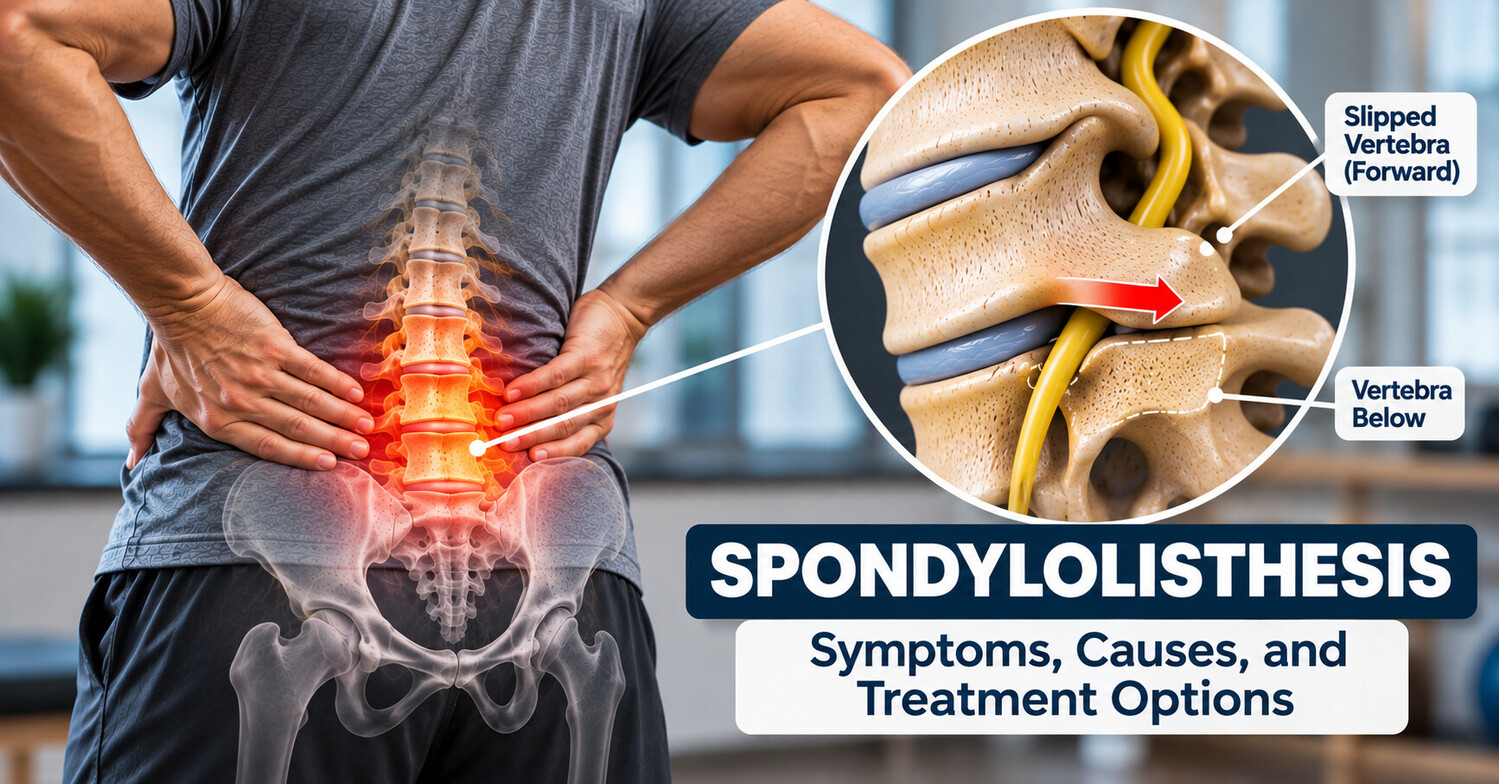
Spondylolisthesis describes the displacement of one vertebra relative to the vertebra immediately below it.
It most commonly occurs in the lumbar spine, particularly at the L4-L5 and L5-S1 levels.
When a vertebra shifts forward, the condition is called anterolisthesis. Backward displacement is called retrolisthesis.
The amount of displacement can vary considerably. Some patients have a small degree of slippage without symptoms, while others develop mechanical back pain or nerve-related symptoms.
Importantly, the presence of spondylolisthesis on an X-ray does not automatically mean that it is responsible for someone's pain.
What Causes Spondylolisthesis?
Several different conditions can contribute to vertebral slippage.
1. Degenerative Spondylolisthesis
Degenerative spondylolisthesis develops as age-related changes affect the spinal joints, discs, and supporting structures.
Over time, these changes may reduce the stability of a spinal segment and allow one vertebra to shift relative to another.
This type most commonly occurs at L4-L5 and is more prevalent in older adults.
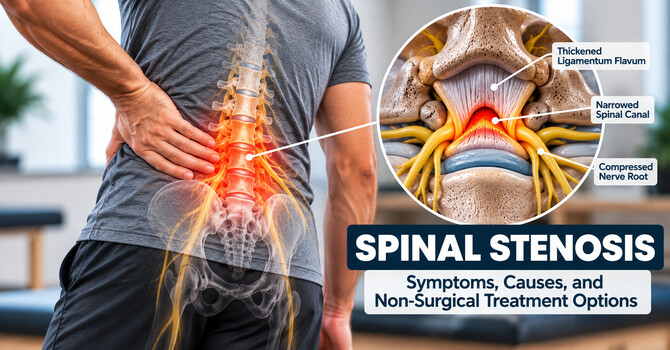
It may also occur alongside degenerative disc disease or spinal stenosis.
2. Isthmic Spondylolisthesis
Isthmic spondylolisthesis develops when a defect or stress fracture occurs in a portion of the vertebra called the pars interarticularis.
This defect is known as spondylolysis.
The pars interarticularis connects portions of the posterior vertebral arch. When a defect develops, it may allow the affected vertebra to slip forward.
Isthmic spondylolisthesis frequently involves the L5-S1 level and may be associated with repetitive spinal extension activities, particularly in certain sports.
Not everyone with spondylolysis develops spondylolisthesis.
3. Other Types of Spondylolisthesis
Less commonly, vertebral slippage can develop because of congenital spinal abnormalities, traumatic injuries, or conditions that weaken the spinal structures.
These situations may require different diagnostic and treatment approaches.
What Are the Grades of Spondylolisthesis?
Spondylolisthesis is commonly classified using the Meyerding grading system, which describes the percentage of forward displacement of the upper vertebra relative to the vertebra below.
| Grade | Amount of Slippage |
|---|---|
| Grade I | 0–25% |
| Grade II | Greater than 25–50% |
| Grade III | Greater than 50–75% |
| Grade IV | Greater than 75–100% |
| Grade V | Greater than 100%, also called spondyloptosis |
Grades I and II are generally considered low-grade spondylolisthesis.
Grades III and IV represent greater displacement and may require closer evaluation depending on symptoms, neurological findings, and spinal stability.
The grade alone does not determine whether surgery is necessary. Symptoms, neurological function, progression, and the patient's overall clinical presentation are also important.
What Are the Symptoms of Spondylolisthesis?
Symptoms vary depending on the location, degree of displacement, and whether nearby nerves are affected.
Common symptoms may include:
-
Persistent or recurring lower back pain
-
Stiffness or tightness in the lumbar spine
-
Pain aggravated by prolonged standing or certain movements
-
Discomfort with backward bending
-
Tightness in the hamstrings
-
Pain traveling into the buttocks or legs
-
Numbness or tingling in the lower extremities
-
Muscle weakness when nerve compression is present
Some patients experience primarily mechanical lower back pain, while others develop neurological symptoms related to narrowing around the spinal nerves.
Can Spondylolisthesis Cause Sciatica?
Yes.
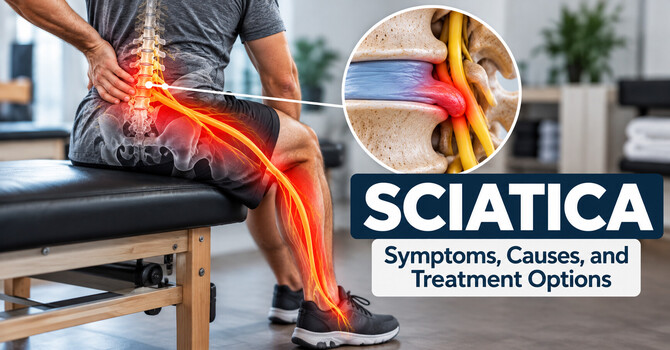
When vertebral slippage contributes to narrowing around a lumbar nerve root, it may produce symptoms similar to sciatica.
These symptoms can include pain traveling into the buttock, thigh, calf, or foot, along with numbness, tingling, or weakness.
Spondylolisthesis may also contribute to lumbar radiculopathy, particularly when the neural foramina become narrowed.
For example, isthmic spondylolisthesis at L5-S1 may contribute to compression of the exiting L5 nerve root.
However, radiating leg pain can have several possible causes, including a herniated disc, and a proper examination is important to identify the likely source.
Is Spondylolisthesis the Same as Spondylolysis?
No. Although the terms sound similar, they describe different conditions.
Spondylolysis is a defect or stress fracture involving the pars interarticularis.
Spondylolisthesis describes the displacement of one vertebra relative to another.
A person may have spondylolysis without vertebral slippage, while degenerative spondylolisthesis can occur without a pars defect.
Understanding this distinction is important because the underlying cause may influence treatment recommendations.
How Is Spondylolisthesis Diagnosed?
Evaluation begins with a detailed history and physical examination.
Your provider may assess:
-
Location and duration of symptoms
-
Lumbar range of motion
-
Muscle strength and flexibility
-
Reflexes and sensation
-
Walking and standing tolerance
-
Orthopedic and neurological findings
-
Movements that increase or decrease symptoms
X-rays
Standing lumbar X-rays are commonly used to identify vertebral displacement and estimate the degree of slippage.
In selected cases, flexion and extension X-rays may help evaluate abnormal movement between vertebrae.
MRI
An MRI of the lumbar spine may be recommended when neurological symptoms suggest nerve compression or when additional soft tissue evaluation is necessary.
MRI can help assess the spinal discs, nerve roots, spinal canal, and surrounding structures.
CT Imaging
CT may be useful in selected cases when detailed evaluation of bony structures, including a suspected pars defect, is necessary.
Can Spondylolisthesis Improve Without Surgery?
Many patients with low-grade spondylolisthesis can manage their symptoms through appropriate conservative care.
Treatment generally focuses on improving physical function, strengthening supporting muscles, modifying aggravating activities, and managing pain.
Conservative treatment does not necessarily reverse the vertebral displacement.
However, symptom improvement does not always require the vertebra to return to its original position.
The appropriate approach depends on the type and grade of spondylolisthesis, neurological findings, spinal stability, and individual health factors.
Can Chiropractic Care Help With Spondylolisthesis?
Some patients with stable, low-grade spondylolisthesis may benefit from an individualized conservative treatment program.
At Northwood Chiropractic & Wellness, treatment recommendations are based on the patient's history, examination findings, neurological status, and imaging when available.
Depending on the condition, conservative care may incorporate:
-
Chiropractic care when clinically appropriate
-
Therapeutic exercises to improve trunk and hip strength
-
Movement coordination and stabilization exercises
-
Manual therapy for selected surrounding musculoskeletal impairments
-
Education regarding activity modification
-
Gradual return to normal activities
High-velocity manipulation directly at a potentially unstable spinal segment may be inappropriate. Patients with significant instability, progressive neurological symptoms, or high-grade slippage require additional evaluation before manual treatment is considered.
Is Spinal Decompression Appropriate for Spondylolisthesis?
Non-surgical spinal decompression uses a specialized treatment table to apply controlled traction forces to the spine.
However, spinal traction has not been established as an effective treatment for correcting vertebral slippage.
Spondylolisthesis, particularly when instability is present, may also be a contraindication to certain traction procedures.
For this reason, patients with spondylolisthesis require careful evaluation before spinal decompression is considered. It should not be assumed that traction is appropriate simply because back pain or disc degeneration is present.
What Exercises May Help With Spondylolisthesis?
Exercise programs should be individualized based on symptoms, stability, neurological findings, and activity tolerance.
Common rehabilitation goals may include:
Core Stabilization
Exercises that improve trunk muscle coordination and endurance may help support the lumbar spine during daily activities.
Hip and Glute Strengthening
Strengthening the gluteal and hip muscles can improve movement control and physical capacity.
Hamstring Mobility
Some patients with spondylolisthesis experience hamstring tightness. Gentle mobility exercises may be appropriate when tolerated.
Movement and Activity Modification
Learning to manage spinal loading during lifting, bending, and exercise may help reduce symptom aggravation.
Exercises involving repeated or forceful lumbar extension may need to be modified when they reproduce symptoms, particularly in patients with symptomatic pars defects.
When Does Spondylolisthesis Require Surgery?
Surgery is not automatically necessary because spondylolisthesis appears on an X-ray.
Surgical evaluation may be considered when patients experience persistent disabling symptoms despite appropriate conservative care, progressive neurological deficits, significant instability, or other concerning findings.
Patients with high-grade or progressive slippage may require specialist assessment even when symptoms are relatively limited.
Seek immediate medical attention for new loss of bowel or bladder control, numbness involving the saddle or groin region, or significant or rapidly worsening leg weakness.
Spondylolisthesis Treatment in Maple Grove, MN
If you've been diagnosed with spondylolisthesis or are experiencing persistent lower back pain, stiffness, or symptoms traveling into your legs, determining the underlying cause is an important first step.
At Northwood Chiropractic & Wellness in Maple Grove, Minnesota, we evaluate spinal and musculoskeletal conditions to determine whether conservative treatment is appropriate.
Depending on your examination findings, care may include chiropractic treatment, therapeutic exercise, manual therapy, and individualized rehabilitation recommendations.
Our goal is to help you understand your condition, improve your movement and function, and determine an appropriate treatment plan.
Schedule your new patient visit to have your symptoms evaluated and discuss appropriate treatment options.

Dr. Greg Beenken
Contact Me