Lumbar Facet Joint Pain: Symptoms & Treatment
Why Your Lower Back May Hurt When Standing, Twisting, or Bending Backward
Does your lower back hurt when you stand for an extended period, twist your torso, or bend backward? While many people assume their back pain comes from a herniated disc or muscle strain, another possible source is the small joints located along the back of the spine.
These structures are called facet joints, and they play an important role in spinal movement and stability.
When facet joints become irritated or develop degenerative changes, they may contribute to localized lower back pain, stiffness, and discomfort during certain movements.
At Northwood Chiropractic & Wellness in Maple Grove, MN, we evaluate patients experiencing low back pain, stiffness, and other spinal conditions to help identify potential sources of discomfort and determine whether conservative treatment is appropriate.
What Are Lumbar Facet Joints?
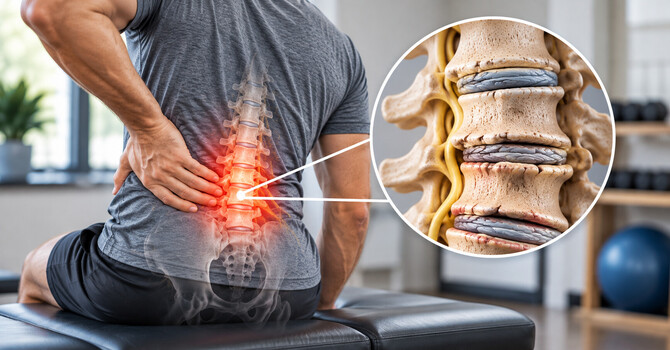
Facet joints, also called zygapophyseal joints, are small joints located along the posterior portion of the spine.
Each vertebra connects with adjacent vertebrae through paired facet joints, which help guide movement and provide stability.
These joints are lined with cartilage and surrounded by a joint capsule containing pain-sensitive tissues.
The lumbar facet joints help control movement while limiting excessive rotation and other potentially stressful motions.
Like other joints throughout the body, facet joints can develop degenerative changes or become a potential source of pain.
What Causes Lumbar Facet Joint Pain?
Several factors may contribute to facet joint irritation or degeneration.
1. Facet Joint Arthritis
Over time, the cartilage and other structures of the facet joints may undergo degenerative changes.
These changes are often described as facet arthropathy or facet osteoarthritis.
However, facet arthritis on an X-ray or MRI does not automatically mean the joint is causing pain.
Many people have degenerative changes visible on imaging without significant symptoms.
2. Degenerative Disc Disease
The intervertebral discs and facet joints work together to distribute forces throughout the spine.
As disc height and structure change, loading patterns across the spinal joints may also change.
Degenerative disc disease can occur alongside facet joint arthritis, particularly in older adults.
3. Repetitive Spinal Loading
Repeated bending, twisting, lifting, or extension movements may aggravate certain spinal structures.
In some individuals, facet joints may contribute to symptoms during these activities.
However, movement-related pain is not specific enough to confirm a facet joint diagnosis by itself.
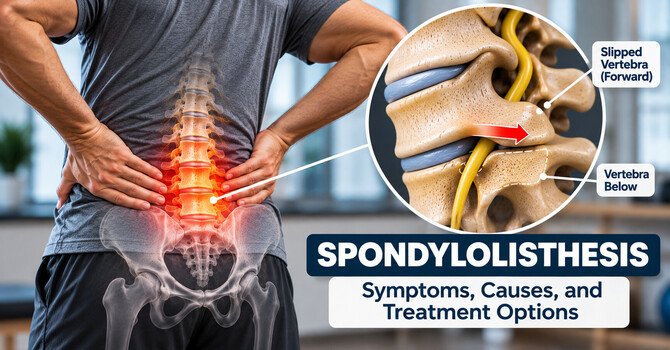
4. Spondylolisthesis
Spondylolisthesis occurs when one vertebra shifts relative to the vertebra below it.
Depending on the underlying cause, vertebral slippage may alter mechanical loading across the spinal joints.
Degenerative spondylolisthesis frequently occurs alongside facet joint degeneration.
What Are the Symptoms of Lumbar Facet Joint Pain?
Symptoms attributed to lumbar facet joints may include:
-
Localized lower back pain
-
Stiffness after prolonged inactivity
-
Discomfort during backward bending
-
Pain with twisting or rotation
-
Symptoms aggravated by prolonged standing
-
Aching into the buttocks or upper thighs
-
Reduced tolerance for certain daily activities
Facet-related pain is often described as an aching or localized discomfort rather than sharp, electrical pain.
However, these symptoms overlap with other spinal conditions, and no single symptom or physical examination maneuver can reliably confirm facet joint pain.
Why Does My Back Hurt When I Bend Backward?
Bending backward, also called lumbar extension, changes how forces are distributed across the lumbar spine.
In some people, extension may aggravate facet joints or other posterior spinal structures.
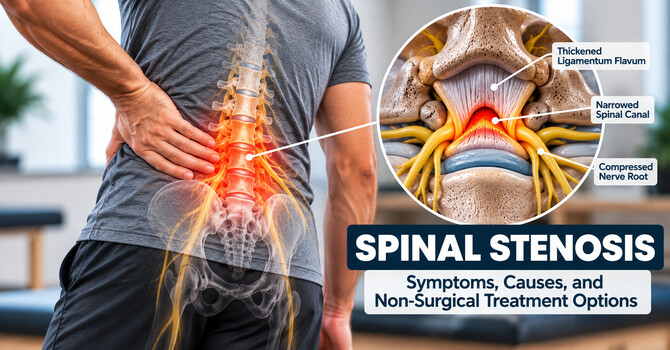
However, pain with extension can also occur with conditions such as spinal stenosis or certain forms of spondylolisthesis.
This is why a comprehensive examination is important rather than assuming that extension-related pain automatically comes from facet joints.
Can Facet Joint Pain Travel Into the Legs?
Facet joint pain may sometimes produce referred discomfort into the buttocks, hips, or thighs.
This is different from pain caused by irritation or compression of a spinal nerve root.
Conditions such as sciatica and lumbar radiculopathy may cause pain traveling farther down the leg, along with numbness, tingling, or muscle weakness.
If you're experiencing neurological symptoms, an evaluation should assess possible nerve involvement rather than attributing the symptoms to facet joints alone.
How Is Lumbar Facet Joint Pain Diagnosed?
Diagnosing facet-mediated pain can be challenging because its symptoms overlap with several other causes of lower back pain.
An initial evaluation may include:
-
Detailed symptom history
-
Lumbar range of motion testing
-
Orthopedic examination
-
Neurological screening
-
Assessment of hip and pelvic mobility
-
Functional movement evaluation
-
Review of relevant imaging when indicated
Can X-rays or MRI Diagnose Facet Joint Pain?
X-rays and MRI can identify degenerative changes involving the facet joints.
However, imaging findings alone cannot establish that a facet joint is the source of pain.
In selected patients with persistent pain, a medical pain specialist may use diagnostic medial branch nerve blocks to help determine whether the facet joints are contributing to symptoms.
These procedures involve temporarily anesthetizing the nerves that supply the facet joints and evaluating the patient's response.
Can Lumbar Facet Joint Pain Improve Without Surgery?
Many patients with mechanical lower back pain can improve through appropriate conservative management.
Treatment often focuses on improving mobility, building strength, increasing activity tolerance, and addressing factors that contribute to symptoms.
Conservative treatment does not necessarily reverse facet joint degeneration, but improvements in pain and physical function may still occur.
Can Chiropractic Care Help With Lumbar Facet Joint Pain?
For some patients with mechanical lower back pain, chiropractic care may be an appropriate component of conservative management.
At Northwood Chiropractic & Wellness, we evaluate the patient's symptoms, movement limitations, neurological findings, and overall condition before recommending treatment.
Depending on the presentation, care may include:
Chiropractic Adjustments
Chiropractic care may incorporate spinal manipulation or mobilization when clinically appropriate.
These approaches may help selected patients with nonspecific or mechanical lower back pain, although treatment response does not establish that the facet joints were the source of symptoms.
Therapeutic Exercise
Exercise programs may focus on improving trunk strength, hip mobility, muscular endurance, and movement coordination.
Manual Therapy
Manual therapy may be used to address selected muscular and joint-related impairments as part of a broader rehabilitation plan.
Activity Modification
Temporary adjustments to activities that repeatedly aggravate symptoms may help patients remain active while gradually improving movement tolerance.
Is Spinal Decompression Appropriate for Facet Joint Pain?
Non-surgical spinal decompression uses controlled mechanical traction forces applied to the spine.
However, there is limited evidence supporting spinal decompression as a specific treatment for facet-mediated pain.
It should not be assumed that traction will correct facet arthritis or eliminate the underlying source of discomfort.
Treatment selection should depend on the patient's diagnosis, examination findings, and individual clinical presentation.
What Exercises May Help With Lumbar Facet Joint Pain?
Exercises should be individualized based on the patient's symptoms, mobility, strength, and functional limitations.
Common rehabilitation approaches may include:
1. Pelvic Tilts
Gentle pelvic tilts can help patients explore comfortable lumbar movement and improve awareness of spinal positioning.
2. Trunk Stabilization Exercises
Exercises targeting the abdominal and spinal stabilizing muscles may improve trunk endurance and movement control.
3. Glute Strengthening
Strengthening the gluteal muscles can support hip function and improve tolerance for daily activities.
4. Hip Mobility Exercises
Improving hip mobility may help patients perform certain movements with less discomfort.
5. Walking and General Conditioning
Regular low-impact activity can help maintain physical conditioning and reduce the impact of persistent back pain.
No single exercise is appropriate for everyone. Activities should be adjusted if they consistently worsen symptoms or produce new neurological complaints.
When Should You Seek Medical Attention?
Most episodes of mechanical lower back pain are not medical emergencies.
However, seek immediate medical attention for:
-
New loss of bowel or bladder control
-
Numbness involving the groin or saddle region
-
Significant or rapidly worsening leg weakness
Back pain accompanied by fever, unexplained weight loss, a history of cancer, or significant trauma also warrants prompt medical evaluation.
Lumbar Facet Joint Pain Treatment in Maple Grove, MN
If your lower back hurts when standing, twisting, or bending backward, facet joint irritation may be one possible explanation.
However, several spinal conditions can produce similar symptoms, making a thorough evaluation important.
At Northwood Chiropractic & Wellness in Maple Grove, Minnesota, we evaluate spinal and musculoskeletal conditions to determine whether conservative treatment is appropriate.
Depending on your examination findings, care may include chiropractic treatment, therapeutic exercise, manual therapy, and individualized rehabilitation recommendations.
Our goal is to help you better understand your symptoms, improve movement and function, and develop an appropriate treatment plan.
Schedule your new patient visit to have your lower back pain evaluated and discuss appropriate treatment options.

Dr. Greg Beenken
Contact Me