Degenerative Disc Disease: Symptoms & Treatment
What Does Degenerative Disc Disease Mean, and Can You Manage It Without Surgery?
If you've recently had an X-ray or MRI of your spine, you may have been told you have degenerative disc disease (DDD). Despite its name, degenerative disc disease isn't actually a disease in the traditional sense. Instead, it describes age-related and structural changes affecting the discs between the vertebrae of your spine.
For some people, these changes cause little to no discomfort. For others, disc degeneration may contribute to chronic back pain, neck pain, stiffness, or symptoms that travel into the arms or legs.
At Northwood Chiropractic & Wellness in Maple Grove, MN, we evaluate patients with spinal degeneration, chronic back pain, and other musculoskeletal conditions to determine whether conservative treatment is appropriate.
Understanding what degenerative disc disease means can help you make informed decisions about your spinal health.
What Is Degenerative Disc Disease?
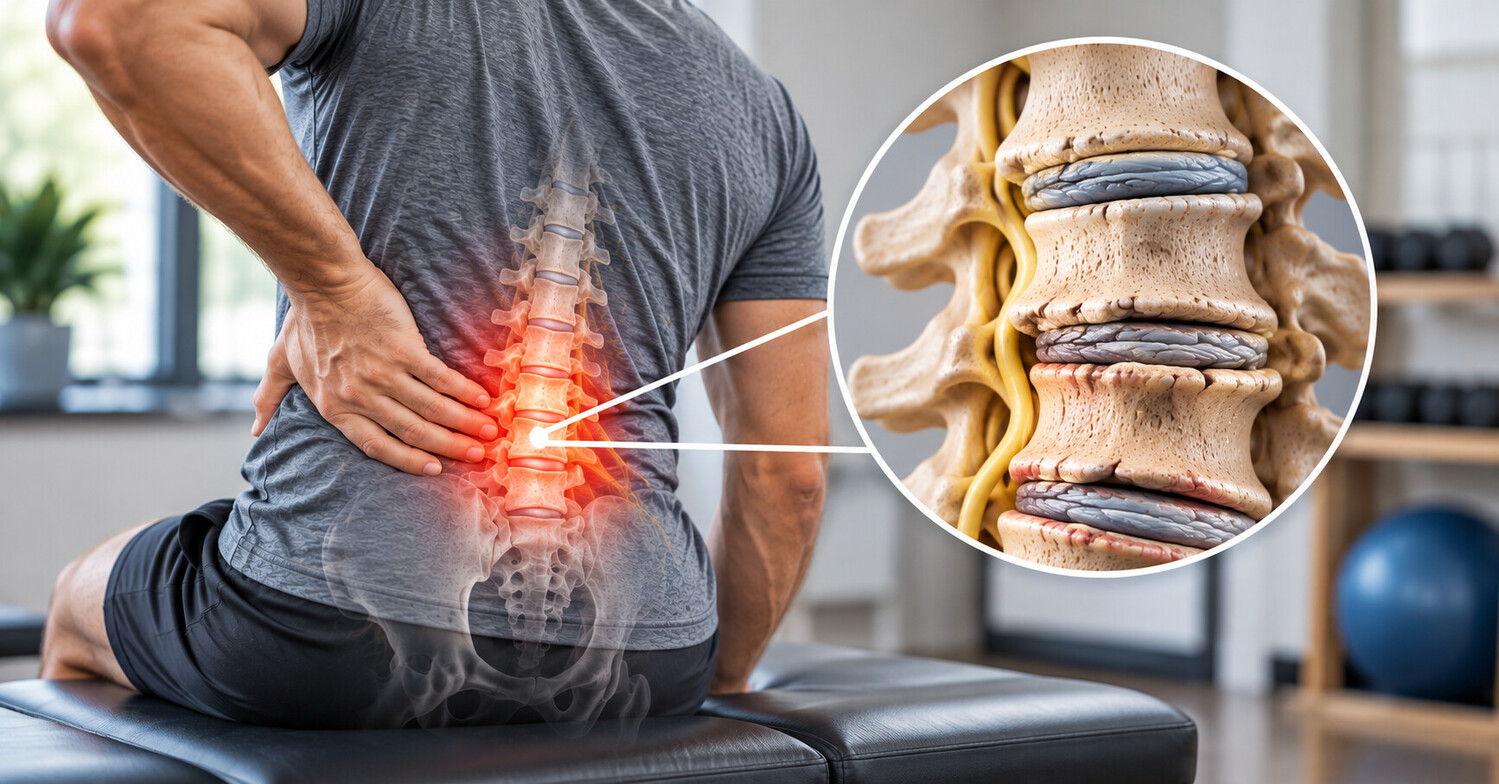
Your spine contains intervertebral discs that act as cushions between the vertebrae. These discs help absorb forces, distribute pressure, and allow movement throughout the spine.
Each disc consists of two primary structures:
-
Annulus fibrosus: The tough outer portion of the disc that provides structural support.
-
Nucleus pulposus: The softer inner portion that helps distribute forces throughout the disc.
Over time, discs can gradually lose water content, flexibility, and height. These changes may alter how forces are distributed throughout the spine.
Degenerative disc disease describes these structural changes, which may occur naturally with aging or develop in association with other factors.
Importantly, disc degeneration on an X-ray or MRI does not automatically mean the disc is causing pain.
What Causes Degenerative Disc Disease?
Disc degeneration is influenced by several factors, including aging, genetics, previous injuries, and cumulative mechanical loading.
Common contributing factors include:
-
Aging: Spinal discs gradually undergo structural and biochemical changes over time.
-
Genetics: Family history can influence susceptibility to disc degeneration.
-
Previous injuries: Certain spinal injuries may contribute to disc changes.
-
Repetitive physical loading: Repeated exposure to demanding movements or occupational stresses may contribute to degeneration.
-
Smoking: Tobacco exposure is associated with disc degeneration and poorer spinal health.
-
Body weight and physical conditioning: These factors can influence spinal loading, symptoms, and overall musculoskeletal function.
Although some factors can be modified, disc degeneration is not always preventable.
What Are the Symptoms of Degenerative Disc Disease?
Many people with degenerative disc changes experience no symptoms.
When symptoms are present, they may include:
-
Persistent or recurring lower back pain
-
Neck pain and stiffness
-
Discomfort with prolonged sitting or standing
-
Pain during certain bending or twisting movements
-
Reduced tolerance for physical activity
-
Muscle tightness or spasms
-
Pain traveling into the arms or legs when nerves are affected
The location of symptoms often depends on which region of the spine is involved.
Lumbar Degenerative Disc Disease
Degeneration in the lower back may be associated with low back pain, stiffness, or discomfort during certain activities.
When disc changes contribute to nerve root compression, patients may also experience sciatica or lumbar radiculopathy, including pain, numbness, tingling, or weakness traveling into the leg.
Cervical Degenerative Disc Disease
Degeneration in the neck may be associated with neck pain, stiffness, headaches, or reduced mobility.
If a cervical nerve root becomes irritated or compressed, symptoms may extend into the shoulder, arm, or hand.
These symptoms require an appropriate examination to determine whether nerve involvement is present.
Can Degenerative Disc Disease Cause a Herniated Disc?
Disc degeneration and disc herniation are related but distinct findings.
As discs undergo structural changes, they may become more susceptible to certain types of damage or displacement.
A herniated disc occurs when disc material becomes displaced beyond its normal boundaries.
A bulging disc involves a broader extension of the disc.
Both findings may occur alongside degeneration, but neither automatically causes pain.
The clinical importance depends on the location of the disc changes, surrounding structures, and whether imaging findings correspond with the patient's symptoms.
How Is Degenerative Disc Disease Diagnosed?
Diagnosis begins with a detailed medical history and physical examination.
Your provider may evaluate:
-
Pain location and symptom duration
-
Spinal range of motion
-
Muscle strength
-
Reflexes and sensation
-
Orthopedic and neurological findings
-
Activities or positions that aggravate symptoms
-
Functional limitations
Imaging may also be appropriate in selected cases.
X-rays
Spinal X-rays can demonstrate findings associated with degeneration, including reduced disc space height, osteophytes (bone spurs), and changes in spinal alignment.
However, X-rays do not directly visualize the soft tissue structure of the intervertebral discs.
MRI
An MRI of the spine provides more detailed information about spinal discs, nerve roots, the spinal canal, and surrounding soft tissues.
MRI may identify disc dehydration, disc height changes, herniations, and other findings.
Because degenerative changes are common in people without pain, imaging findings must be interpreted alongside the patient's symptoms and examination.
Does Degenerative Disc Disease Get Worse Over Time?
Degenerative changes can progress with age, but this does not necessarily mean symptoms will continuously worsen.
Some patients experience intermittent flare-ups, while others remain relatively symptom-free despite significant imaging changes.
The amount of degeneration seen on imaging does not reliably predict the severity of pain or future disability.
Maintaining physical activity, improving strength, and addressing functional limitations may help people manage symptoms even when structural changes remain present.
Can Degenerative Disc Disease Be Reversed?
Currently, conservative treatments cannot reliably restore a degenerated disc to its original structure.
However, improving symptoms and function does not require reversing the degeneration itself.
Many patients can improve their activity tolerance, mobility, strength, and quality of life through appropriate conservative management.
Treatment goals typically focus on reducing symptoms, maintaining physical function, and helping patients remain active.
What Are the Treatment Options for Degenerative Disc Disease?
Treatment depends on the patient's symptoms, functional limitations, neurological findings, and overall health.
Conservative options may include:
Chiropractic Care
Chiropractic care may be appropriate for selected patients experiencing mechanical neck or back pain associated with degenerative spinal changes.
Treatment should be individualized, with attention to the patient's symptoms, examination findings, and potential contraindications.
Therapeutic Exercise and Rehabilitation
Exercise is an important component of managing many forms of persistent spinal pain.
A rehabilitation program may incorporate:
-
Core and trunk strengthening
-
Hip and lower extremity strengthening
-
Mobility exercises
-
Movement coordination
-
Gradual return to normal physical activities
The specific exercises should be selected based on the patient's presentation and tolerance.
Manual Therapy
Manual therapy may be incorporated into a broader conservative treatment plan to address selected musculoskeletal impairments and improve short-term movement tolerance.
Non-Surgical Spinal Decompression
Non-surgical spinal decompression uses controlled traction forces applied through a specialized treatment table.
Although traction is sometimes used for selected spinal conditions, evidence for its effectiveness in degenerative disc disease is limited, and it should not be presented as a method of reversing degeneration or rebuilding discs.
Not every patient is an appropriate candidate.
When Does Degenerative Disc Disease Require Surgery?
Most people with degenerative disc changes do not require surgery simply because degeneration is present on imaging.
Surgical evaluation may be considered when there is significant nerve compression, progressive neurological dysfunction, or persistent disabling symptoms that do not respond adequately to appropriate nonsurgical care.
Seek immediate medical attention for new loss of bowel or bladder control, saddle-region numbness, or significant or rapidly worsening weakness.
How Can You Manage Degenerative Disc Disease at Home?
Several strategies may help manage symptoms and support long-term spinal function.
-
Stay active: Regular walking and appropriate exercise can help maintain strength and movement tolerance.
-
Build strength: Progressive trunk, hip, and lower extremity strengthening may improve physical capacity.
-
Change positions regularly: Avoid remaining in one uncomfortable position for extended periods.
-
Use appropriate lifting mechanics: Gradually build tolerance for lifting and other demanding movements.
-
Maintain healthy habits: Adequate sleep, smoking cessation, and regular physical activity support overall health.
-
Avoid unnecessary fear of movement: Degenerative findings do not automatically mean your spine is fragile or damaged beyond repair.
Individual recommendations should reflect the patient's symptoms and medical history.
Degenerative Disc Disease Treatment in Maple Grove, MN
If you've been diagnosed with degenerative disc disease or are experiencing persistent neck pain, lower back pain, stiffness, or radiating symptoms, understanding the source of your discomfort is an important first step.
At Northwood Chiropractic & Wellness in Maple Grove, Minnesota, we evaluate spinal and musculoskeletal conditions and provide individualized conservative treatment recommendations.
Depending on your examination findings, care may include chiropractic treatment, therapeutic exercise, manual therapy, and other appropriate nonsurgical approaches.
Our goal is to help you understand your condition, improve your movement and function, and remain active in the activities that matter to you.
Schedule your new patient visit to have your symptoms evaluated and discuss appropriate treatment options.

Dr. Greg Beenken
Contact Me