A herniated disc is a common cause of back pain, neck pain, sciatica, and pain that travels into the arms or legs. While some herniated discs cause few or no symptoms, others can irritate or compress nearby spinal nerves and significantly interfere with everyday activities.
At Northwood Chiropractic & Wellness in Maple Grove, MN, we evaluate patients with back pain, neck pain, sciatica, and other symptoms that may be associated with spinal disc injuries.
Understanding what a herniated disc is—and how it can affect the nerves—is an important first step toward determining the right treatment approach.
What Is a Herniated Disc?
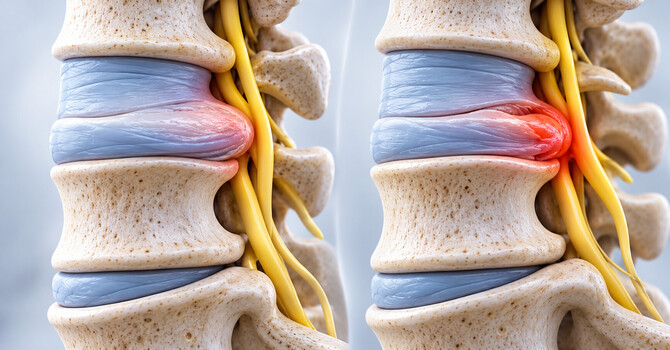
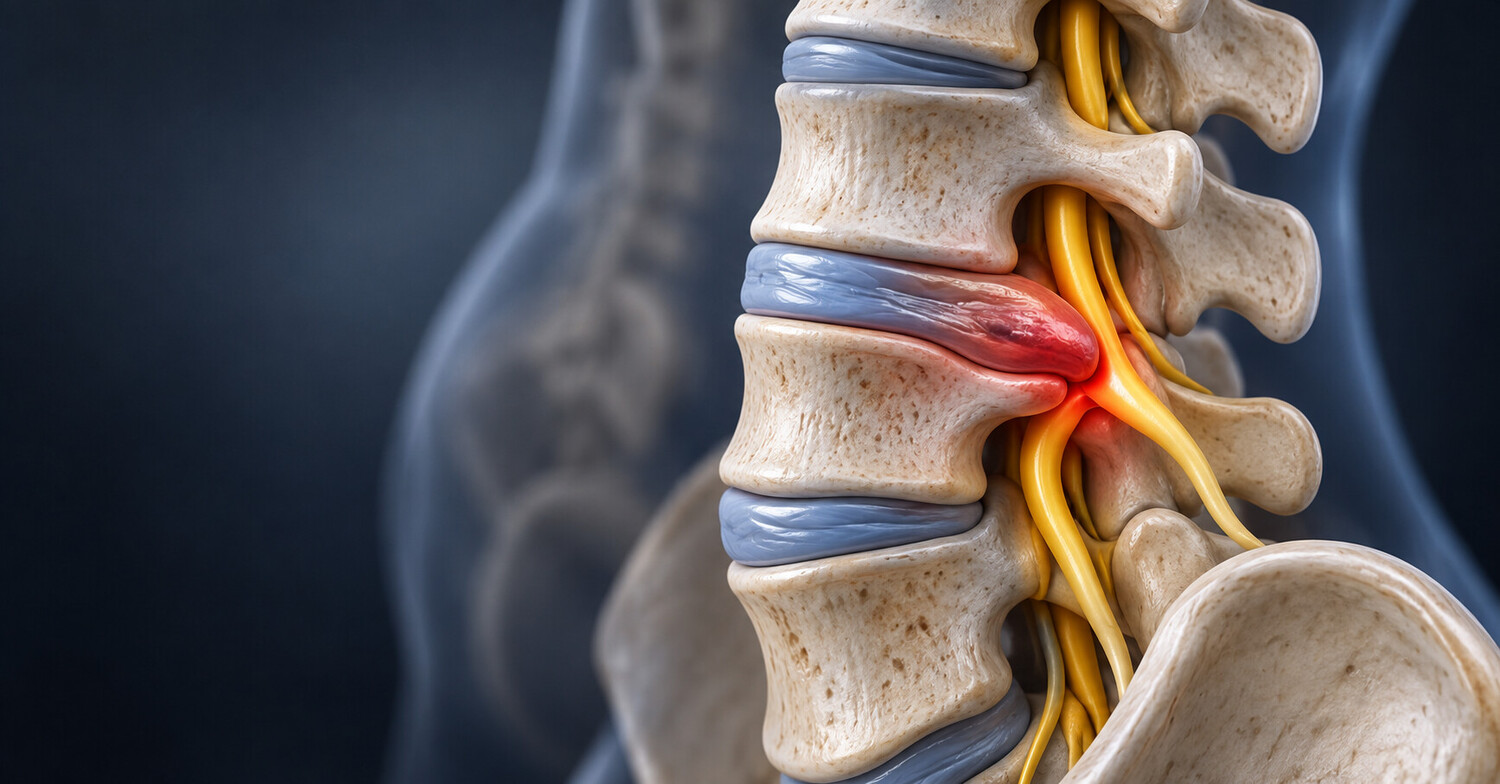
Between the vertebrae of your spine are structures called intervertebral discs. These discs provide cushioning between the vertebrae and help your spine move and absorb forces during everyday activities.
Each disc has a tougher outer layer called the annulus fibrosus surrounding a softer inner portion called the nucleus pulposus.
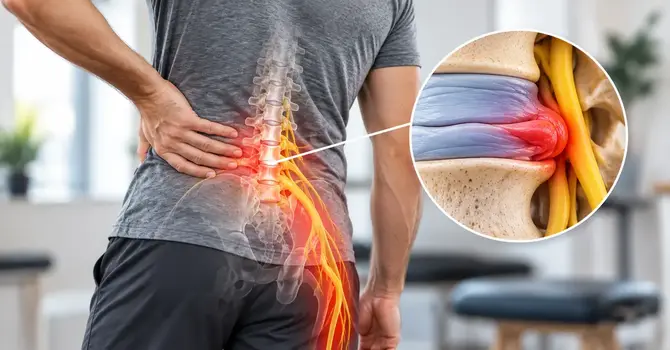
A herniated disc occurs when material from the inner portion of the disc pushes through a weakened or damaged area of the outer portion.
The presence of a disc herniation does not automatically mean someone will experience pain. Symptoms become more likely when the disc causes inflammation or affects a nearby spinal nerve.
What Does a Herniated Disc Feel Like?
Symptoms depend heavily on the location and severity of the disc injury.
A herniated disc in the lumbar spine, or lower back, may cause:
-
Low back pain
-
Buttock pain
-
Pain traveling down the leg
-
Numbness or tingling
-
Muscle weakness
-
Burning or electrical sensations
-
Symptoms that worsen with certain positions or movements
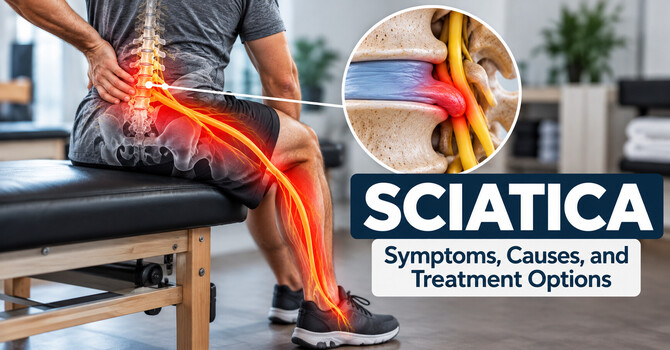
When a lumbar disc affects one of the nerve roots contributing to the sciatic nerve, it may produce symptoms commonly referred to as sciatica.
Can a Herniated Disc Cause Sciatica?
Yes. A lumbar disc herniation is one potential cause of sciatica.
Sciatica describes symptoms associated with irritation or compression involving the sciatic nerve or its contributing nerve roots. Pain may begin in the lower back or buttock and travel into the thigh, lower leg, or foot.
Depending on which nerve root is involved, a person may also experience numbness, tingling, altered reflexes, or weakness in particular muscles.
Herniated Disc vs. Bulging Disc
The terms bulging disc and herniated disc are sometimes used interchangeably, but they don't necessarily describe the same finding.
A disc bulge generally involves a broader extension of the disc beyond its normal boundary, while a herniation involves more localized displacement of disc material.
More importantly, an imaging finding alone doesn't always tell us how much pain someone should be experiencing.
Some people have significant disc changes on MRI without experiencing symptoms, while others may have substantial pain or neurological symptoms associated with a smaller disc injury.
What Causes a Herniated Disc?
Disc herniations can develop for several reasons.
Age-related changes can gradually alter the structure of a spinal disc. In other cases, symptoms may begin after lifting, twisting, bending, repetitive stress, sports, or another injury.
Sometimes there isn't one obvious event that caused the problem.
Common contributing factors may include repetitive loading, improper lifting mechanics, prolonged sitting, physical work, previous spinal injuries, and normal age-related changes to the discs.
How Is a Herniated Disc Diagnosed?
Evaluation typically starts with a detailed history and physical examination.
Your provider may evaluate:
-
Where your pain is located
-
Whether pain travels into an arm or leg
-
Muscle strength
-
Reflexes
-
Sensation
-
Range of motion
-
Orthopedic and neurological findings
-
Positions or movements that increase or decrease symptoms
When appropriate, imaging may also be recommended.
An MRI provides detailed images of the spinal discs, nerves, spinal canal, and surrounding soft tissues and can help identify the location and characteristics of a suspected disc herniation.
Do All Herniated Discs Require Surgery?
No.
Many people with symptomatic lumbar disc herniations improve without surgery.
Conservative treatment may include modifying aggravating activities, therapeutic exercise, rehabilitation, manual therapy, chiropractic care when clinically appropriate, and other nonsurgical treatment options.
Treatment should be based on the patient's symptoms, examination findings, neurological status, imaging when indicated, and overall health.
Can Chiropractic Care Help With a Herniated Disc?
Chiropractic treatment isn't simply about treating what appears on an MRI.
The first step is determining whether a patient's symptoms and examination findings are consistent with a disc-related condition and whether conservative care is appropriate.
At Northwood Chiropractic & Wellness, treatment recommendations are individualized based on the patient's examination and presentation.
Depending on the patient, conservative treatment may incorporate chiropractic care, therapeutic exercises, mobility work, manual therapy, and other approaches intended to improve function and reduce irritation.
Some patients with disc-related conditions may also be candidates for non-surgical spinal decompression.
What Is Non-Surgical Spinal Decompression?
Non-surgical spinal decompression uses a specialized table to apply controlled traction to the spine.
At Northwood Chiropractic & Wellness, spinal decompression may be incorporated into treatment for appropriately selected patients with certain disc-related conditions.
It isn't appropriate for every patient or every type of back pain, which is why an examination and proper diagnosis are important before beginning treatment.
When Is a Herniated Disc an Emergency?
Most episodes of back pain or disc-related pain are not medical emergencies. However, certain neurological symptoms require immediate medical evaluation.
Seek urgent medical attention if you develop significant or rapidly worsening weakness, loss of bowel or bladder control, or numbness involving the saddle or groin region.
These symptoms can potentially indicate serious compression of the nerves at the bottom of the spinal canal known as cauda equina syndrome.
Herniated Disc Treatment in Maple Grove, MN
If you're experiencing persistent back pain, sciatica, numbness, tingling, or pain traveling into your leg, identifying the source of the symptoms is an important first step.
At Northwood Chiropractic & Wellness in Maple Grove, Minnesota, we evaluate spinal and musculoskeletal conditions to determine whether conservative treatment is appropriate and develop an individualized treatment plan.
Depending on your condition, treatment may include chiropractic care, therapeutic exercise, manual therapy, and non-surgical spinal decompression.
If you're dealing with back pain or symptoms traveling into your leg, schedule an evaluation to determine what's causing your symptoms and what treatment options may be appropriate.

Dr. Greg Beenken
Contact Me