What Sports Injuries Do We Treat?
Sports injuries can involve the spine, joints, muscles, and tendons—and they don't only happen during competition.
We evaluate and treat a variety of musculoskeletal injuries commonly seen with training, exercise, and recreational sports, including:
- Shoulder and rotator cuff pain
- Tennis or golfer's elbow
- Low back and neck pain
- Hip and groin strains
- Knee pain
- Hamstring and other muscle strains
- Ankle and foot injuries
- Tendon irritation and overuse injuries
- Sprains and joint injuries
- Golf, running, and lifting-related injuries
Some injuries happen suddenly, while others develop gradually as training volume, intensity, technique, or recovery demands change.
The location of the pain tells us where you're hurting—the evaluation helps determine what's actually limiting your ability to perform.
How We Evaluate Sports Injuries
A sports injury evaluation should consider both the injured area and what your activity requires you to do.
We'll discuss how the injury happened, what movements aggravate it, and what you need to be able to do to return to your sport or activity.
Your examination may include:
- Range-of-motion and mobility testing
- Strength testing
- Orthopedic testing of the injured area
- Evaluation of surrounding joints and muscles
- Balance, stability, or movement testing when appropriate
- Neurological testing when nerve involvement is suspected
- Sport- or activity-specific movement assessment
- Review of X-rays, MRI, or other imaging when available
For an athlete, simply being able to perform everyday activities without pain may not be enough. We'll consider the strength, mobility, control, and workload demands required for your specific activity.
The goal isn't just to identify what hurts—it's to understand what may be preventing you from safely returning to your activity.
How Are Sports Injuries Treated?
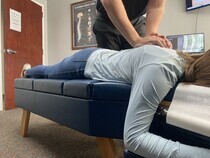
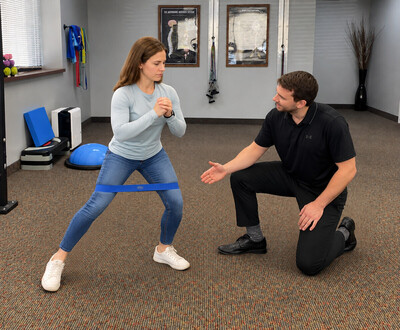


Return-to-Activity Progression
When Should You Get a Sports Injury Checked?
Not every ache after training is an injury, but persistent or recurring symptoms deserve a closer look.
Consider having an injury evaluated if you have:
- Pain that continues to return when you train
- Swelling, bruising, or loss of motion after an injury
- Weakness or reduced ability to produce force
- Pain that changes how you run, lift, swing, throw, or move
- Numbness, tingling, or other neurological symptoms
- Difficulty progressing back to your previous training level
- Symptoms that aren't improving despite reducing or modifying activity
More urgent medical evaluation may be appropriate after significant trauma, an obvious deformity, inability to bear weight, severe swelling, or sudden substantial loss of strength or function.
You don't necessarily need to wait until an injury stops you completely before having it evaluated.
How Do You Know When You're Ready to Return to Sport?
Feeling better is important, but returning to activity also requires rebuilding the capacity to handle your sport.
As your injury improves, rehabilitation can gradually progress toward the movements and demands you'll encounter when you return.
Depending on your activity, we may work toward:
- Restoring comfortable range of motion
- Rebuilding strength and power
- Improving balance, stability, and movement control
- Increasing tolerance for running, jumping, lifting, swinging, or throwing
- Gradually increasing training volume and intensity
- Reintroducing sport-specific movements
- Building confidence in the previously injured area
Return-to-sport decisions should be based on more than whether an area still hurts. Movement, strength, function, and your response to progressively greater workloads all provide useful information.
The goal is to prepare you for what your sport actually demands—not simply get you through everyday activities without pain.
Ready to Get Back to Your Sport?
Start with an evaluation to understand your injury and what you need to safely return to activity.
Your $19 New Patient Special includes a consultation, comprehensive examination, X-rays if needed, and your first chiropractic adjustment when clinically appropriate.