Pain that lasts for weeks or months can be frustrating.
Maybe you've tried resting, stretching, massage, medications, chiropractic care, or exercise—and the pain keeps coming back.
When that happens, it's easy to assume something must still be damaged.
But persistent pain is often more complicated than that.
Understanding why pain can continue is an important first step toward getting back to the activities that matter to you.
What Is Chronic Pain?
Chronic or persistent pain generally refers to pain that continues beyond the expected period of healing, often for three months or longer.
Common examples include:
- Chronic back pain
- Chronic neck pain
- Recurring headaches
- Persistent shoulder pain
- Arthritis-related pain
- Long-term pain following an injury
The longer pain has been present, the less useful it can be to think of it simply as a signal that tissue is damaged.
Pain Doesn't Always Equal Damage
Pain is real—but pain and tissue damage aren't always directly proportional.
You can have significant pain with relatively minor structural findings.
You can also have substantial changes on an X-ray or MRI without experiencing much pain at all.
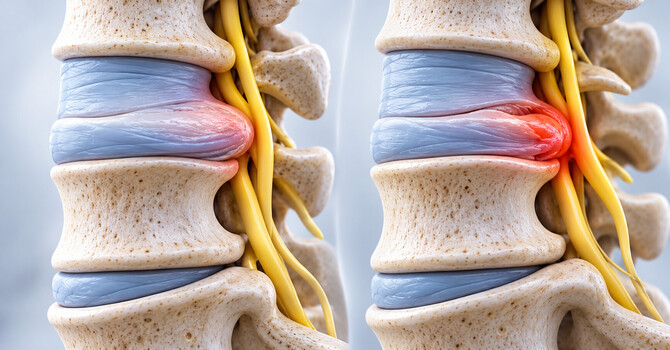
Imaging commonly identifies age-related changes such as:
- Disc degeneration
- Disc bulges
- Arthritis
- Bone spurs
- Joint degeneration
These findings can sometimes be relevant, but they need to be interpreted alongside your symptoms and examination.
An MRI finding by itself doesn't always tell us exactly why something hurts.
Why Can Pain Continue?
Persistent pain can be influenced by several factors.
These may include:
- Previous injury
- Reduced strength or physical capacity
- Repeated aggravating activities
- Poor sleep
- Stress
- Reduced activity
- Fear of certain movements
- Work demands
- Changes in how the nervous system processes pain
This doesn't mean the pain is “in your head.”
It means pain is influenced by more than one structure or tissue.
Rest Isn't Always the Answer
Rest can be useful immediately following certain injuries.
But when pain has persisted for months, continually avoiding movement can sometimes create another problem.
You may gradually lose:
- Strength
- Endurance
- Mobility
- Confidence
- Tolerance for everyday activity
Then normal activities can start feeling increasingly difficult.
The goal is usually not to avoid movement forever.
It's to determine what you can currently tolerate and progressively build from there.
Exercise Can Be an Important Part of Chronic Pain Management
Exercise doesn't need to mean running five miles or lifting heavy weights.
Your starting point should match your current ability.
Depending on the problem, rehabilitation and movement might include:
- Walking
- Mobility exercises
- Strength training
- Core or trunk exercises
- Balance exercises
- Gradual exposure to previously painful movements
Over time, the goal is to improve your body's ability to tolerate the activities you want to perform.
Can Chiropractic Care Help With Chronic Pain?
For some musculoskeletal conditions, chiropractic care may help manage symptoms and improve comfortable movement.
That can include manual treatment directed at the spine or other joints.
But chiropractic treatment doesn't need to be based on the idea that your spine is “out of alignment.”
And adjustments aren't the only tool available.
For someone dealing with persistent pain, treatment may work best when symptom relief is combined with strategies designed to improve strength, movement and activity tolerance.
What About Massage Therapy?
Massage therapy can also be useful for some people with chronic muscle soreness, stiffness or tension.
Massage may temporarily help you feel more comfortable and make movement easier.
But just like chiropractic treatment, massage doesn't need to be viewed as something that repeatedly “fixes” your muscles.
It can simply be one useful tool within a larger plan.
Do You Need to Be Completely Pain-Free Before Exercising?
Not necessarily.
For many persistent musculoskeletal problems, some discomfort during activity doesn't automatically mean you're causing additional damage.
The important questions include:
- How severe are the symptoms?
- Do they settle afterward?
- Are symptoms progressively worsening?
- Is your function improving?
- Are neurological symptoms developing?
Your rehabilitation program can be adjusted based on how your body responds.
What If Imaging Shows Degeneration?
Words like degeneration, arthritis, disc bulge, or bone spur can sound alarming.
But these findings don't automatically mean your spine is fragile or that you should stop being active.
Imaging findings become more meaningful when they correspond with your symptoms, examination and neurological findings.
The goal should be to treat the person and their functional limitations, not simply an image.
When Does Chronic Pain Need Further Evaluation?
Persistent pain deserves another look when symptoms aren't behaving as expected.
Further evaluation may be appropriate if you develop:
- Progressive weakness
- Significant numbness or tingling
- Changes in bowel or bladder control
- Saddle-area numbness
- Unexplained weight loss
- Fever associated with significant pain
- Severe unrelenting night pain
- Symptoms following significant trauma
Those findings can change what type of evaluation or treatment is appropriate.
Progress Should Be Measured by More Than Pain
If you've experienced pain for months or years, expecting the pain score to immediately drop to zero may not be the best way to judge progress.
We also want to know:
Can you walk farther?
Can you sit longer?
Are you sleeping better?
Can you lift more?
Can you exercise again?
Can you return to work, golf, gardening, playing with your kids, or another activity you've been avoiding?
Those improvements matter.
Chronic Pain Treatment in Maple Grove, MN
At Northwood Chiropractic & Wellness, our goal isn't to promise a “pain-free tomorrow.”
It's to understand what's contributing to your symptoms and determine what can reasonably be done about it.
Depending on your condition, care may include chiropractic care, rehabilitation and movement, massage therapy, spinal decompression, activity modification, or referral for additional evaluation when appropriate.
Ultimately, we want to help you move better, build confidence in your body, and get back to the activities that matter to you.
Start Feeling Better for Just $19
Your first visit includes a consultation, comprehensive exam, X-rays if needed, and your first chiropractic adjustment when clinically appropriate.

Dr. Greg Beenken
Contact Me