Low back pain can quickly take the enjoyment out of a round of golf.
Maybe your back tightens up after nine holes. Maybe it hurts during your downswing. Or perhaps you feel fine while playing but can barely bend over to take your shoes off afterward.
Golf places unique demands on the body.
The golf swing requires rotation, speed, coordination and force production, repeated dozens of times during a round.
When your body isn't prepared for those demands—or when something becomes irritated—your lower back may be where you feel it.
Why Does Golf Cause Low Back Pain?
There's rarely one universal cause.
Golf-related back pain can be influenced by:
- Sudden increases in how much you play
- Large amounts of driving-range practice
- Reduced strength or conditioning
- Previous back injuries
- Limited tolerance to rotation
- Disc or nerve irritation
- Arthritis
- Muscle strains
- Swing mechanics
- Fatigue
The important question isn't simply “Does golf hurt my back?”
It's “Why is my back having difficulty tolerating golf right now?”
The Golf Swing Places Significant Demand on Your Back
A golf swing isn't a gentle rotational stretch.
It's an athletic movement.
During the swing, your hips, trunk, shoulders and arms have to coordinate to generate and transfer force into the club.
Your lower back participates in that movement, but it isn't working alone.
That's why evaluating a golfer with back pain should involve more than simply examining the painful spot.
We may also look at:
- Hip movement
- Thoracic rotation
- Trunk strength
- Lower-body strength
- Balance
- Golf-specific movement
- Previous injuries
The goal isn't to identify every tiny movement imperfection.
It's to identify factors that may actually matter for your symptoms and your golf swing.
Is Limited Hip Rotation Causing Your Back Pain?
Not automatically.
Golfers are sometimes told that if their hips or upper back don't rotate perfectly, their lower back will compensate and become injured.
The relationship isn't that simple.
Golfers have different bodies and different swings.
However, if limited movement in another area clearly affects how you swing or reproduces your symptoms, improving that movement may be useful.
The finding needs to matter to you, not simply fail a generic mobility test.
Strength Matters for Golfers
Golfers sometimes focus heavily on flexibility while overlooking strength.
But strength helps your body tolerate force.
Building capacity through your:
- Legs
- Hips
- Trunk
- Upper back
- Shoulders
may help prepare you for the physical demands of repeatedly swinging a club.
A golf rehabilitation program shouldn't just consist of stretching your hamstrings and rotating your spine.
Rehabilitation and movement should progressively prepare you to produce and tolerate force.
What About Core Strength?
Your trunk plays an important role in the golf swing, but you don't need to spend hours performing tiny “core activation” exercises.
Depending on the golfer, useful exercises might eventually include:
- Carries
- Rows
- Squats
- Deadlift or hip-hinge variations
- Rotational exercises
- Anti-rotation exercises
- Medicine-ball work
The appropriate exercise depends on your symptoms, ability and stage of recovery.
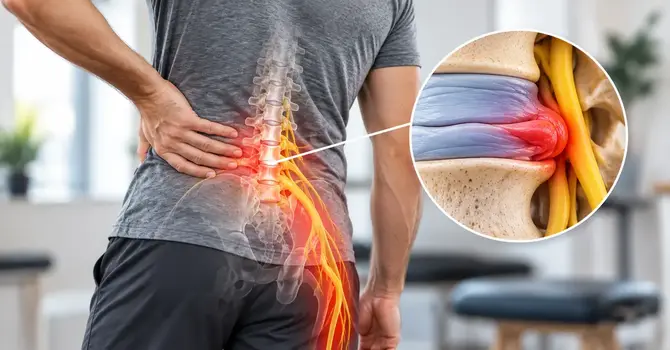
Could a Disc Problem Cause Golf-Related Back Pain?
Yes.
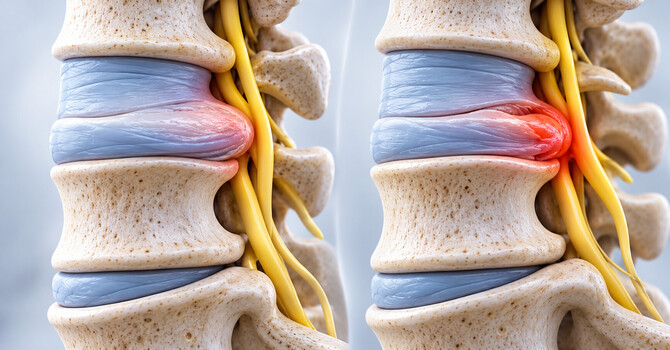
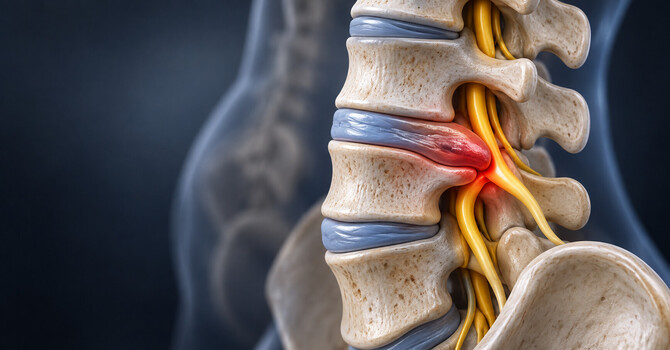
Disc-related problems can sometimes contribute to low back pain.
If a lumbar nerve is irritated or compressed, symptoms may also travel into the buttock or leg.
You might experience:
- Leg pain
- Numbness
- Tingling
- Burning
- Weakness
Radiating leg symptoms may indicate sciatica and deserve a more complete evaluation.
That doesn't mean every golfer with back pain needs an MRI.
Imaging decisions should depend on your history, examination and symptoms.
What About Arthritis?
Age-related changes are extremely common in the lower back.
X-rays or MRIs may show:
- Arthritis
- Disc degeneration
- Bone spurs
- Narrowing around spinal joints
These findings can sometimes contribute to symptoms, but they don't automatically mean you need to stop playing golf.
Many golfers continue playing successfully despite degenerative changes.
Your function and symptoms matter more than the imaging terminology alone.
Can Golfers Develop Stress Fractures?
They can.
Stress injuries such as spondylolysis can occur in rotational athletes, particularly with repetitive extension and rotation.
This is more relevant when evaluating certain younger athletes or someone with a history and examination consistent with that type of injury.
Persistent focal back pain that isn't behaving like typical mechanical back pain deserves appropriate evaluation.
Should You Stop Playing Golf When Your Back Hurts?
It depends.
If playing significantly worsens your symptoms, temporarily reducing your golf volume may make sense.
But that doesn't necessarily mean complete rest.
You might temporarily:
- Play nine holes instead of 18
- Reduce driving-range volume
- Avoid hitting large buckets of balls
- Use shorter practice sessions
- Modify aggravating movements
- Continue other tolerable exercise
Then progressively increase your golf volume as your back improves.
Think of returning to golf as building capacity, not simply waiting for pain to disappear.
Warm Up Before You Tee Off
Your warm-up doesn't need to take 30 minutes.
Before playing, gradually expose your body to the movements you're about to perform.
That might include:
- Walking
- Squats
- Hip movements
- Trunk rotation
- Shoulder movement
- Easy practice swings
Then gradually increase swing speed.
Going directly from sitting in your car to swinging a driver as hard as possible isn't much of a warm-up.
Can Chiropractic Care Help Golfers With Back Pain?
For some golfers with musculoskeletal back pain, chiropractic care may help reduce symptoms and improve comfortable movement.
Manual treatment can be useful, particularly when pain is making it difficult to move normally.
But getting adjusted shouldn't be the entire plan.
If you're trying to return to golf, we also need to consider whether your body is prepared for the speed, rotation and repeated loading required by your swing.
That's where rehabilitation and progressive exercise become important.
Golf-Specific Low Back Pain Care in Maple Grove, MN
If golf is important to you, the goal shouldn't simply be getting you comfortable enough to sit on the couch.
We want you back on the course.
At Northwood Chiropractic & Wellness, we'll evaluate your back while also considering the physical demands of your golf swing.
Depending on the problem, treatment may include chiropractic care, rehabilitation and movement, activity modification, massage therapy or other conservative approaches.
The goal is to help you move comfortably, rebuild your capacity and keep playing the game you enjoy.
Start Feeling Better for Just $19
Your first visit includes a consultation, comprehensive exam, X-rays if needed, and your first chiropractic adjustment when clinically appropriate.

Dr. Greg Beenken
Contact Me