Pregnancy changes your body quickly.
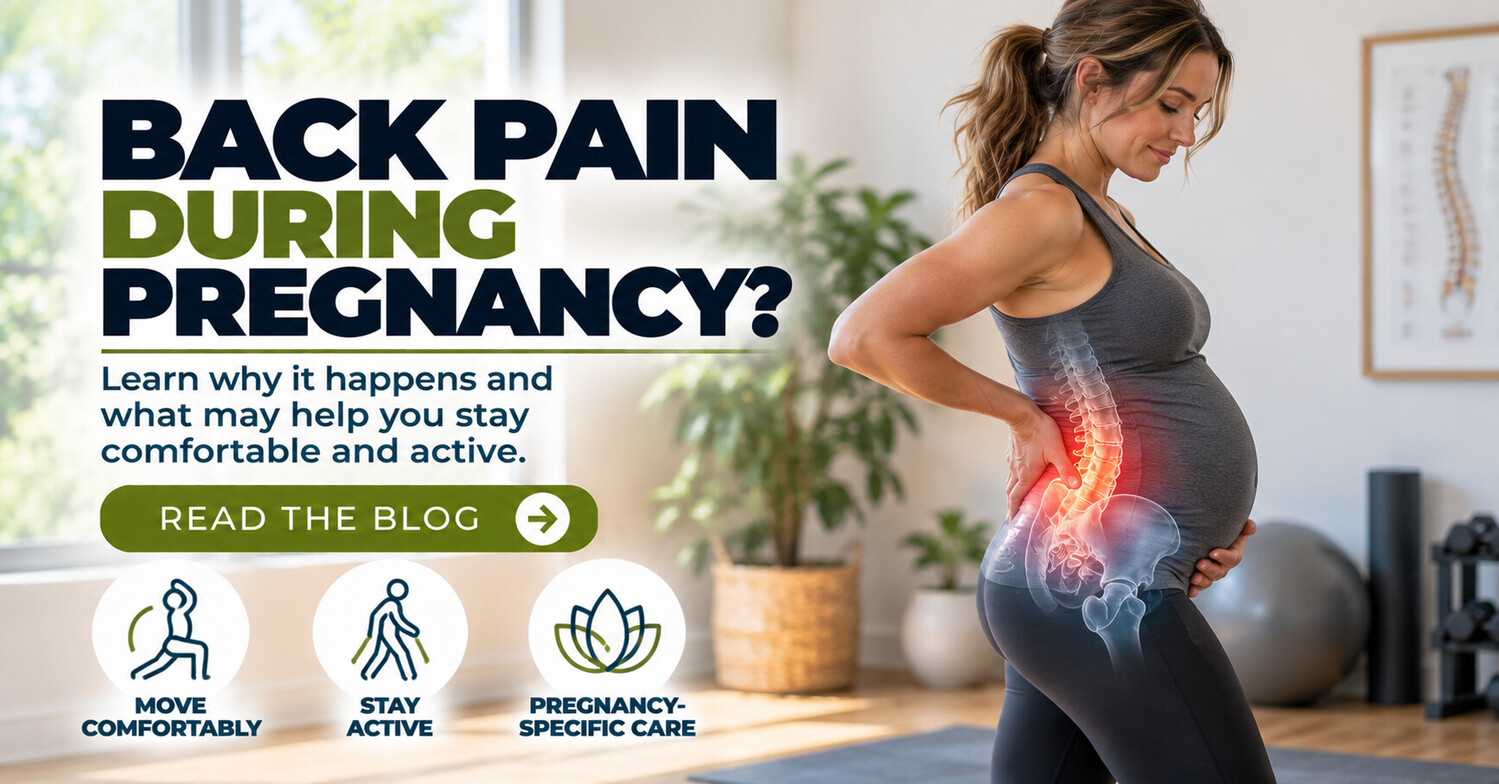
As your baby grows, changes in body weight, activity, sleep, joint loading and movement can contribute to new aches and pains.
Low back and pelvic discomfort are particularly common.
For some pregnant patients, conservative treatment—including chiropractic care—may be one option for managing musculoskeletal discomfort and staying active.
Why Does Back Pain Happen During Pregnancy?
There usually isn't one single cause.
Pregnancy-related back pain can be influenced by:
- Changes in body weight
- Increased demand on the lower back and pelvis
- Changes in how you walk and move
- Reduced activity
- Muscle fatigue
- Previous episodes of back pain
- Changes in sleep and recovery
- Increased joint mobility associated with pregnancy
These changes don't necessarily mean anything is wrong with your spine or pelvis.
Your body is adapting to pregnancy, but those adaptations can sometimes become uncomfortable.
Is Your Pelvis Really “Out of Alignment”?
Pregnant patients are sometimes told their pelvis has moved “out of place” and needs to be put back into alignment.
That's not a good way to describe what's happening.
Your pelvis is a strong structure designed to tolerate significant forces.
Pregnancy does produce changes in the joints, muscles and connective tissues around the pelvis, and these areas can become painful.
But treatment doesn't require repeatedly putting your pelvis back into place.
Can Chiropractic Care Help During Pregnancy?
For some women experiencing pregnancy-related musculoskeletal pain, chiropractic care may provide short-term symptom relief and help them move more comfortably.
Treatment should be modified appropriately for pregnancy.
As pregnancy progresses, positioning and treatment techniques may need to change to keep the patient comfortable.
The goal is straightforward:
Help you feel and move better—not “correct” your pregnancy.
What About Pelvic Girdle Pain?
Some pregnant women experience pain around the pelvis rather than—or in addition to—the lower back.
Symptoms may be felt around the:
- Sacroiliac region
- Buttocks
- Pubic area
- Hips
- Groin
Activities such as walking, climbing stairs, rolling over in bed or getting in and out of a car may aggravate symptoms.
Treatment depends on the individual and may include activity modification, appropriate manual treatment and exercises designed to maintain strength and comfortable movement.
Exercise Is Still Important
Unless your obstetric healthcare provider has given you activity restrictions, remaining physically active during pregnancy is generally encouraged.
The exact exercise program depends on your previous activity level, pregnancy and symptoms.
For someone dealing with back or pelvic discomfort, rehabilitation and movement might focus on maintaining:
- Leg strength
- Hip strength
- Trunk strength
- Comfortable mobility
- General physical activity
Exercise doesn't need to eliminate every ache or pain to be beneficial.
The goal is to maintain as much comfortable activity and physical capacity as reasonably possible.
What About Massage Therapy During Pregnancy?
Massage therapy may also be helpful for some pregnant patients experiencing muscle soreness or tension.
Positioning needs to be comfortable and appropriate for the stage of pregnancy.
Massage doesn't change the position of the baby or realign the pelvis, but it may provide temporary relief from muscular discomfort and help with relaxation.
Is Chiropractic Care Safe During Pregnancy?
Pregnancy should always be disclosed before treatment so techniques and positioning can be modified appropriately.
There are also situations where symptoms need to be evaluated by an obstetric or medical provider rather than treated as routine musculoskeletal pain.
Contact your pregnancy care provider promptly for symptoms such as:
- Vaginal bleeding
- Fluid leakage
- Regular painful contractions
- Significant abdominal or pelvic pain
- Fever
- Dizziness or fainting
- Shortness of breath or chest pain
- Severe headache or vision changes
- Sudden significant swelling
- Decreased fetal movement later in pregnancy
Those aren't symptoms to simply treat as a back problem.
Do You Need X-Rays?
Usually not for uncomplicated pregnancy-related back pain.
We don't routinely X-ray every patient who walks through the door, and pregnancy is an especially important consideration when determining whether imaging is necessary.
If imaging or additional medical evaluation is warranted, that decision should be based on your history, examination and clinical circumstances.
Chiropractic Care During Pregnancy in Maple Grove, MN
If pregnancy is making your back, hips or pelvis uncomfortable, the first step is determining whether the symptoms appear musculoskeletal and whether conservative treatment is appropriate.
At Northwood Chiropractic & Wellness, treatment can be modified based on your stage of pregnancy, symptoms and comfort.
Depending on your situation, care may include chiropractic care, rehabilitation and movement and massage therapy.
Our goal is to help you stay comfortable, active and moving throughout your pregnancy.
Start Feeling Better for Just $19
Your first visit includes a consultation, comprehensive exam, X-rays if clinically appropriate, and your first chiropractic adjustment when clinically appropriate.

Dr. Greg Beenken
Contact Me